


Gin Rummy GC Online
4.0350.00 Reviews
App Specs
- Version
- 2.2.1
- Updated On
- License
- Free
- Downloads
- 100,000+
- Developer
- GameClubUSA.com
- Categories
- Card
- Platform
- Android
Screenshots
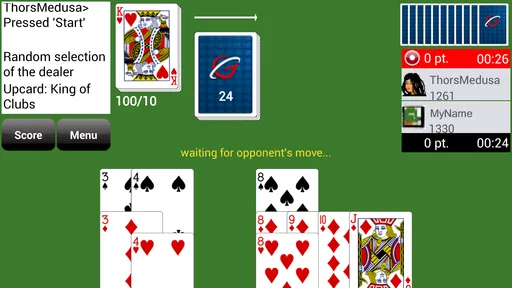
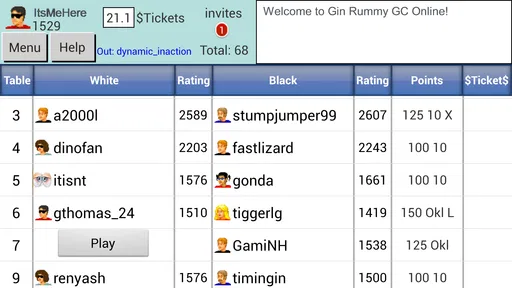
 Analysis by AppCompare
I came back to Gin Rummy GC Online because it turns a familiar card game into a small daily contest. The basic appeal is easy to understand: I sit down, find another player, and try to read the discard pile better than they do. What makes this version worth examining is not a huge collection of extra systems, but the way live competition, chat, a ladder, and tournaments give each hand a little more meaning than a private game against a computer.
This is a free card game from GameClubUSA.com, rated Teen, and it has been available since July 17, 2013. The current version is 2.2.1, and it runs on Android 7.0 or later. Its store presence is established, with over one hundred thousand installs, an average rating of four stars from around two thousand six hundred ratings, and roughly three hundred fifty written reviews. Those figures suggest a modest but real player base rather than a brand-new experiment.
I would recommend it most readily to someone who already understands the rhythm of gin rummy and wants human opponents. If you are hoping for a story campaign, elaborate card collection, or a heavily decorated progression system, this is not that kind of game. Its progression comes mainly from the quality of your decisions and the competitive context around each match. That focus is both its strongest feature and its main limitation.
How the first sessions create goals
I find the opening sessions most useful when I treat them as a chance to set a personal target, rather than expecting the game to hand me a checklist. I might focus on reading discards more carefully or making fewer rushed choices, then use that aim to judge the next match. That approach makes the competitive options easier to approach, which is where the next section looks at how progress and pressure interact.
Learning the table instead of chasing unlocks
The first useful goal is simply to stop wasting information. In gin rummy, every card you pick up or discard tells the other player something, and a live opponent reacts to those clues. I found that the early sessions were less about building a long-term collection and more about learning what the table was communicating. A winning hand feels good, but a well-timed discard that denies an opponent a likely combination can be just as satisfying.
That makes the starting experience more demanding than a casual solitaire-style card game. A computer opponent can often be treated as a puzzle with recognizable habits. A person may change plans after seeing one discard, hold a dangerous card to disguise a meld, or knock earlier than expected. The early goal is therefore practical: develop a reliable routine for sorting cards, tracking what has appeared, and deciding when a hand is worth extending.
I suggest new players avoid rushing into competitive ambitions. Spend the first few games watching the discard pile as carefully as your own hand. If you repeatedly pick up cards that reveal the same suit or sequence, you are giving away a pattern. Sometimes the better move is to keep a less obvious combination and discard something that creates uncertainty. That is the kind of lesson a live match teaches quickly.
Worth Reading Before You Choose

EA SPORTS FC Mobile 26 Is a Bigger Football Game, but It Takes Time

Flipboard Shows What News Apps Must Do Beyond the Feed

Switching to Android Auto Means Rethinking Your Driving Routine

Google Calendar Makes a Crowded Week Easier to Manage

Ludo King Makes the Most of the Minutes Between Plans

Baby Panda World Brings Quick Play to Modern Phones, but Its Game Library Feels Busy
Why real opponents change the opening experience
The live format also gives the game an immediate social edge. The chat option can make a table feel less anonymous, especially when players exchange a quick greeting or react to a close hand. I would not treat chat as the reason to install the game, but it changes the tone of a match. A quiet win against an unseen opponent is one thing; a narrow turnaround after a tense exchange feels more memorable when another person is present.
At the same time, anyone who prefers a completely private, interruption-free experience may find the online setting less comfortable. Human competition brings unpredictability, and chat is not automatically an advantage for every player. I would approach it as an optional part of the atmosphere rather than a required social commitment. The central activity remains the cards.
One useful early habit is to separate improvement goals from result goals. Instead of judging a session only by wins, I might decide to avoid feeding obvious runs, recognize when the opponent is collecting a suit, or make more disciplined decisions about knocking. This keeps a losing session useful. Because each hand is compact, I can focus on one adjustment at a time instead of trying to rebuild my entire playing style.
Where the ladder and tournaments fit
The ladder gives ordinary matches a longer horizon. A single hand can go badly because of an awkward draw, but a sequence of games gives me a reason to return and test whether I am actually improving. Tournaments add another layer of pressure for players who want a more event-like challenge. They make the game feel less like filling a few idle minutes and more like preparing for a meaningful contest.
That structure is appealing when I want a clear reason to play another match. It is less compelling if I only want a relaxed card game with no concern about standing. The ladder can encourage careful play, but it can also make mistakes feel heavier. I found the best approach was to use regular games for experimentation and treat more competitive sessions as a place to apply habits I had already practiced.
The important distinction is that the game’s goals are performance-based. I am not primarily working toward a new visual theme, a story chapter, or a growing collection of characters. I am working toward better choices and stronger results against other people. Players who enjoy visible cosmetic rewards may find that less satisfying than players who like measuring their own judgment.
Progress, difficulty, and the pressure to keep playing
Progress here is less about collecting rewards than noticing whether my decisions improve, and that can make the ladder feel either motivating or demanding depending on my mood. I try to separate a disappointing result from a poor decision before deciding whether to play again. With that distinction in mind, the next section considers how opponent strength and the urge to continue can shape a session.
Progress signals that come from play
The clearest progress signal is how confidently I handle information. Early on, I may focus only on completing my own melds. With experience, I start asking what the opponent is trying to hide, which cards are safe to release, and whether holding a card for one more turn is worth the risk. The ladder and tournament setting provide an external reflection of that growth, while the hands themselves provide the more honest test.
This kind of progress is subtle. There is no need for the game to explain every improvement with a reward screen. I notice it when I stop taking an attractive discard automatically, when I recognize that a promising sequence is too easy for the opponent to read, or when I close a hand before greed turns a good position into a bad one. For me, those moments are more meaningful than a simple accumulation of virtual items.
A practical way to track improvement is to review decisions immediately after a match. I ask myself which discard gave the opponent the most useful information and whether I delayed a knock without a strong reason. I also pay attention to hands where I lost despite making sensible choices. That distinction matters: a bad result does not always mean bad play, and a win can sometimes hide a risky habit that a stronger opponent will punish later.
The difficulty curve is driven by people
The difficulty curve does not feel like a traditional campaign that moves from easy stages to hard stages. It depends heavily on the opponents I meet and on how much pressure I put on myself through the ladder or tournaments. That variability is exciting because a familiar opening can suddenly become a battle of patience. It can also feel uneven when I am still learning and meet someone who reads the table far more efficiently.
For beginners, the hardest adjustment is often not the rules but the speed of decision-making. A live match leaves less room for endlessly reconsidering every card. I found it helpful to use a simple priority order: first look for an immediate improvement to the hand, then consider what the discard reveals, and finally judge whether keeping a card creates too much dead weight. This reduces hesitation without turning every move into a rigid formula.
Experienced gin rummy players may appreciate that the game does not need to manufacture difficulty through complicated mechanics. The opponent is the difficulty. A cautious player creates a different problem from an aggressive one, and a tournament context can make familiar decisions feel more consequential. The trade-off is that the game may be less welcoming to someone who wants a gentle, predictable introduction.
I would choose a conventional offline or computer-based card game instead if my priority were a controlled learning environment. Those alternatives are better for pausing, repeating the same situation, or practicing without social pressure. This title is better when I want the uncertainty of a real person and the satisfaction of adapting on the fly.
Pacing: short decisions, meaningful pauses
The pacing suits small pockets of time, but it is not mindless. I can play a match during a break, yet I still need enough attention to remember the discard history and avoid impulsive choices. That makes it a good companion for a routine in which I have a few uninterrupted minutes, such as after finishing a commute or while waiting for an appointment. I would not start a serious tournament-style session when I know I may need to abandon the table suddenly.
The rhythm also depends on the opponent. A decisive player keeps the game moving, while a cautious one can make each turn feel more deliberate. That variation is part of the online experience, though it means the game cannot guarantee the same pace every time. People who need consistently rapid rounds may prefer a faster arcade card game, while players who enjoy thinking through a hand will probably accept the slower moments.
One of the more useful pacing choices is knowing when not to chase a perfect hand. Holding several cards in hope of a dramatic finish can leave the hand exposed. I have found that a modest, secure improvement is often more valuable than a beautiful combination that needs several unlikely draws. The game rewards patience, but not passive waiting; every extra turn gives the opponent more information and more opportunities.
Where retention becomes pressure
The ladder, tournaments, live opponents, and chat create several reasons to return. That is effective retention because the next match can answer a personal question: Was the last win repeatable? Did I misread the opponent? Can I handle a more cautious player? The game’s long-term appeal comes from those questions rather than from a narrative that pushes me through a sequence of chapters.
Still, competitive structure can encourage unhelpful habits. I may be tempted to continue after a frustrating loss simply to recover my standing or prove that the previous result was a fluke. That is when a short card game can quietly become a longer session than intended. I recommend setting a stopping rule before playing, such as ending after a certain number of matches or after noticing that decisions are becoming emotional rather than thoughtful.
The free entry point makes trying the game easy, but in-app purchases range from $2.99 to $17.99 per item. I would treat those purchases cautiously and decide first whether the core live-card experience is enjoyable without spending. A purchase should not be the reason I continue playing, and I would avoid making one simply because a losing streak has made me impatient. The game is most convincing when the competition itself supplies the motivation.
Privacy-minded or socially cautious players may also want to think about the online format before committing. The presence of real opponents and chat is central to the identity of this version, not a minor extra. If I wanted a solitary game with no interaction, a local card app would be a better fit. If I wanted a broader social experience with more communication tools, a dedicated multiplayer platform might suit me more, though it would not necessarily provide the same focused gin rummy routine.
Who should install it, and who should skip it
I think it is a strong match for players who already know the basics of gin rummy, enjoy reading human behavior, and like having a ladder or tournament context around familiar rules. It is also suitable for someone who wants a free way to test whether online competition adds energy to a classic card game. The four-star average from around two thousand six hundred ratings indicates that many players find the overall experience worthwhile, while the more modest scale of the community suggests a focused rather than enormous ecosystem.
I would skip it if I wanted a rich single-player campaign, elaborate unlock trees, or a game built around collecting and customizing cards. I would also hesitate if I disliked competitive uncertainty or found chat distracting. New players can learn, but they should expect the first sessions to feel more exposed than practice against a predictable computer opponent. The Teen content rating is another reason parents and younger players should consider whether the online setting is appropriate for them.
Device compatibility is straightforward for supported Android users because the game requires Android 7.0 or later. I would still check that the phone or tablet is running a compatible version before planning a regular routine around it. Since the current release is 2.2.1, I would keep expectations centered on the established card experience rather than assuming it offers the kind of constant reinvention found in newer live-service games.
My progression verdict
My overall view is that the progression works because it stays close to the reason people play gin rummy in the first place: making better decisions against a person who is trying to do the same. The early goals are understandable, the ladder and tournaments give wins more context, and the difficulty grows through opponent quality and competitive pressure rather than a pile of artificial obstacles.
That design will not satisfy everyone. Players who need frequent unlocks, dramatic rewards, or a clearly scripted difficulty curve may feel that progress is too quiet. The online format can also make the experience uneven, and the purchase range means I would keep a firm boundary around optional spending. Those are not small details; they determine whether the game feels motivating or stressful.
For me, the best use is a focused session in which I choose one skill to improve, play a few thoughtful matches, and stop before the ladder turns into an obligation. In that role, Gin Rummy GC Online offers a convincing bridge between a traditional card table and live mobile competition. I would recommend it to a friend who wants real opponents and a reason to sharpen their play, but I would point a solitary, story-focused, or reward-driven player toward a different kind of card game.
Pros
- Smooth online multiplayer matches with players around the world.
- Simple rules and clear card layouts make games easy to follow.
- Quick rounds suit short gaming sessions and casual play.
- Leaderboards add a competitive goal for regular players.
- Available on mobile devices for convenient play anywhere.
Cons
- Online play depends on a stable internet connection.
- Some opponents may have much more experience than newcomers.
- Random card draws can make matches feel luck-dependent.
- Ads or optional purchases may interrupt the overall experience.
- The player base may be smaller during off-peak hours.
FAQs for Gin Rummy GC Online
What is Gin Rummy GC Online?
Gin Rummy GC Online is a digital version of the classic two-player card game, designed for playing against other people or computer-controlled opponents. The main objective is to form sets and runs while reducing the value of unmatched cards in your hand. It is aimed at both casual players and experienced Gin Rummy fans who want quick matches on a mobile device.
Can I play Gin Rummy GC Online without an internet connection?
The online features generally require an active internet connection, especially when joining multiplayer matches, competing against real opponents, or accessing account-related services. Depending on the version and available game modes, some practice or single-player options may work offline. However, users should not expect the full online experience, rankings, or multiplayer matchmaking to function without a stable connection.
Is Gin Rummy GC Online free to download and play?
Gin Rummy GC Online can typically be downloaded without an upfront purchase, allowing users to try the basic gameplay before spending money. Like many mobile card games, it may include optional in-app purchases, advertisements, virtual currency, or premium features. Before downloading, check the store listing and payment settings carefully, particularly if children may use the device.
Does the game offer multiplayer matches and different difficulty levels?
The game is primarily suited to competitive card play, with online matches being one of its main attractions. Players may also find single-player games against computer opponents, which can be useful for learning the rules or practicing strategies. Difficulty, matchmaking, leagues, or tournament availability can vary by version, region, and updates, so these features should be confirmed in the current app listing.
Is Gin Rummy GC Online suitable for beginners?
Beginners can use Gin Rummy GC Online to learn the fundamentals, but the experience may be easier if they already understand basic Gin Rummy terms such as melds, sets, runs, knocking, and deadwood. New players should start with practice matches and review any in-game instructions before entering competitive games. Online opponents may play quickly, so patience is important while learning.


